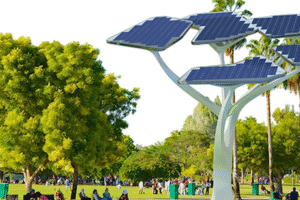
In the age of growing environmental consciousness and rapid urbanization, finding innovative ways to harness renewable energy is more important than ever. One such groundbreaking invention is the solar tree, a structure designed to mimic the shape of a tree while generating solar power through strategically placed photovoltaic (PV) panels. These aesthetically pleasing and space-efficient installations are becoming increasingly popular in cities, educational campuses, parks, and commercial spaces.
What is a Solar Tree?
A solar tree is an artificial structure that resembles a natural tree, but instead of leaves, it features branches fitted with solar panels. These “branches” are mounted at different angles to maximize sunlight capture throughout the day. The design allows for the installation of multiple panels in a limited space, often vertically, which significantly reduces the land footprint required for solar energy generation.
Typically, a solar tree can power streetlights, benches with charging stations, Wi-Fi hotspots, and even homes and buildings when scaled properly. They can be customized in size and energy output depending on the needs of the location where they are installed.
Advantages of Solar Trees
- Space Efficiency
One of the biggest benefits of a solar tree is its space-saving design. Unlike conventional solar farms that require large tracts of land, solar trees take up very little ground space while still delivering a high energy yield. - Eco-Friendly
Solar trees contribute significantly to the reduction of carbon emissions and dependency on fossil fuels. Since they operate solely on sunlight, they produce clean and renewable energy that does not harm the environment. - Urban Integration
These installations are perfect for urban areas where space is limited. They can be placed in parks, sidewalks, or even building courtyards, integrating seamlessly into the cityscape while promoting sustainability. - Educational and Aesthetic Appeal
Besides their practical uses, solar trees also serve as educational tools, raising awareness about renewable energy. Their modern and futuristic design adds a visual appeal to the surroundings. - Multi-functional Utility
Many solar trees come equipped with additional features such as LED lighting, USB charging ports, weather sensors, and public information displays, making them functional community hubs.
Applications of Solar Trees
- Urban Infrastructure: Used in smart cities to power street lighting, public charging stations, and information kiosks.
- Educational Institutions: Serve as demonstration models for renewable energy education while also supplying power.
- Parks and Gardens: Offer shaded seating areas with integrated solar-powered amenities.
- Commercial Complexes: Help businesses offset electricity costs and showcase their commitment to sustainability.
Notable Projects and Innovations
Countries like India, the United States, and Germany are investing heavily in solar tree installations. In India, the Central Mechanical Engineering Research Institute (CMERI) has developed various models, some capable of generating up to 5 kW of power daily. These trees are being deployed in smart cities, railway stations, and government buildings as part of broader green initiatives.
Meanwhile, in the United States, solar trees are becoming a common sight in university campuses and tech company headquarters. Innovations in design continue to improve efficiency, with some models incorporating rotating panels that follow the sun’s path for maximum energy capture.
The Future of Solar Trees
The future of solar trees looks bright, especially as urban populations grow and the need for sustainable infrastructure increases. Advances in solar panel technology and energy storage solutions will only enhance their efficiency and utility.
Incorporating renewable energy solutions like solar trees into daily life is no longer a futuristic concept—it’s happening now. Their potential to revolutionize how we think about space, design, and energy consumption makes them an integral part of the green transition.
Conclusion
The solar tree is a shining example of innovation meeting sustainability. With its unique blend of functionality, aesthetic appeal, and environmental benefit, it is a forward-thinking solution to the energy challenges of today and tomorrow. As awareness and adoption grow, solar trees will undoubtedly play a significant role in creating greener, smarter cities for future generations.
Ask ChatGPT
